

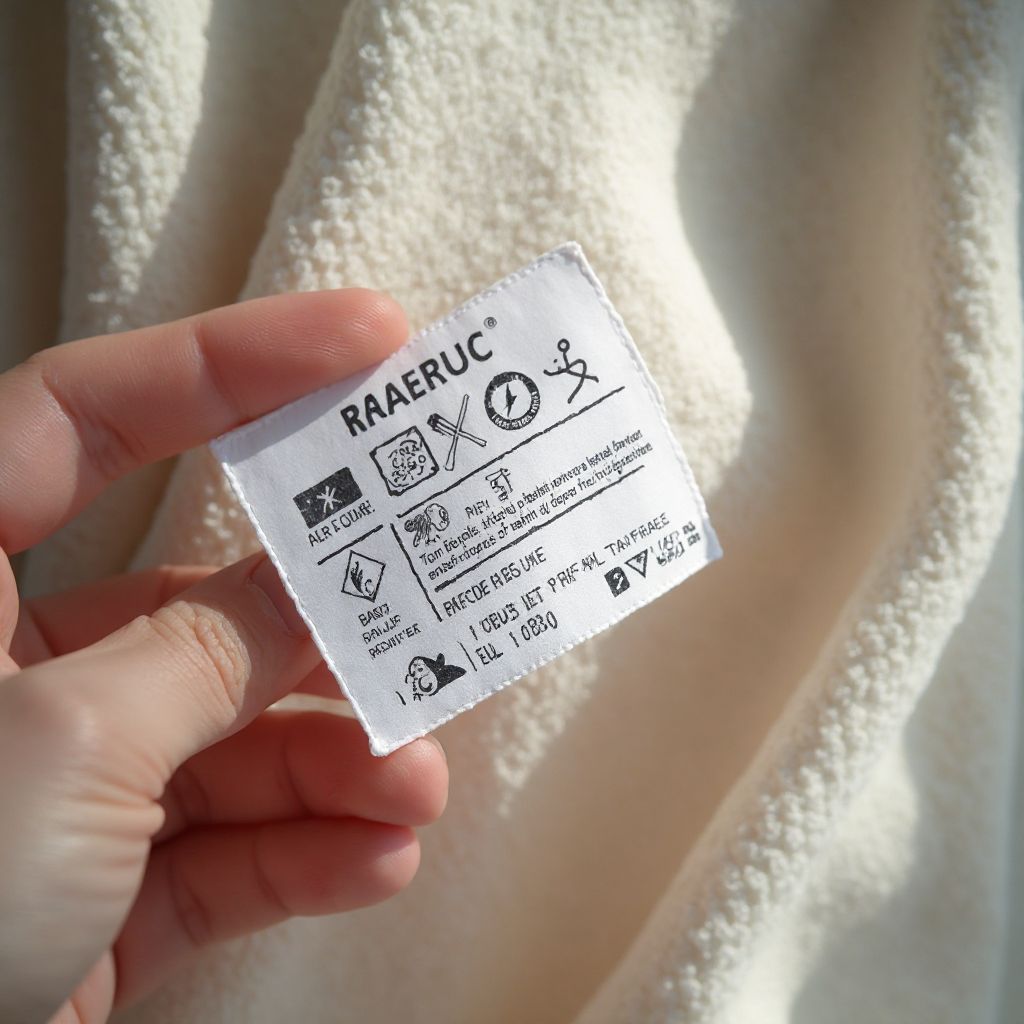
How to Read a Clothing Label and What All Those Symbols Mean
Ever stared blankly at a clothing label, feeling like you’re deciphering an ancient hieroglyphic script? You’re not alone! As a fashion stylist with a decade of experience, I’ve seen countless clients bewildered by those tiny tags, often leading to shrunken sweaters, faded dresses, or worse – a beloved item ruined. But what if I told you that understanding these labels is one of the most empowering fashion skills you can develop?
The Secret Language of Your Wardrobe
In today’s fashion landscape, where sustainability meets fast-paced trends, knowing your clothing label is more relevant than ever. It’s not just about laundry day anymore; it’s about making informed choices. Are you investing in a timeless Chanel tweed jacket or a trendy Zara top? The label holds the key to its longevity, comfort, and even its ethical footprint. Understanding the fabric composition helps you choose breathable materials for summer, warm ones for winter, or performance fabrics for your Nike workout gear. It allows you to protect your investments, whether it’s a luxurious Hermès silk scarf or a durable pair of Ralph Lauren chinos, ensuring they look their best for years to come. It’s about being a conscious consumer in an industry that often encourages disposability.
Your Comprehensive Guide to Decoding Clothing Labels
Let’s break down the essential information hidden within those tiny tags, turning confusion into confidence.
1. The Fabric Story: What’s It Made Of?
This is often the first and most crucial piece of information. The material composition dictates everything from how an item feels to how it should be cared for.
- Natural Fibers:
- Cotton: Breathable, soft, durable. Great for everyday basics from H&M or ASOS.
- Linen: Strong, absorbent, dries quickly. Prone to wrinkling, perfect for breezy summer wear.
- Wool: Warm, resilient, naturally wrinkle-resistant. Think cozy Ralph Lauren sweaters.
- Silk: Luxurious, soft, drapes beautifully. Often found in high-end pieces from Gucci or Louis Vuitton, requiring delicate care.
- Synthetic Fibers:
- Polyester: Durable, wrinkle-resistant, quick-drying. Common in activewear like Nike and many fast-fashion items.
- Nylon: Strong, elastic, water-resistant. Often used in outerwear and hosiery.
- Rayon/Viscose: Mimics silk or cotton, drapes well, breathable. Can be less durable when wet.
- Spandex/Elastane/Lycra: Adds stretch and shape retention, found in everything from jeans to swimwear.
- Blends: Many garments combine fibers to get the best of both worlds (e.g., cotton-polyester for durability and breathability, or wool-cashmere for warmth and softness).
2. The Care Code: Deciphering the Symbols
These universal symbols are your instruction manual for laundry day. They follow ISO standards, so once you know them, you know them worldwide!
- Washing (Tub Symbol):
- Tub with water: Machine wash. Numbers inside (e.g., 30, 40) indicate max temperature in Celsius.
- Tub with hand: Hand wash only.
- Tub with X: Do not wash.
- One line under tub: Gentle cycle. Two lines: Very gentle/delicate cycle.
- Bleaching (Triangle Symbol):
- Empty triangle: Any bleach allowed.
- Triangle with two diagonal lines: Non-chlorine bleach only.
- Triangle with X: Do not bleach.
- Drying (Square Symbol):
- Square with circle inside: Tumble dry. Dots inside the circle indicate heat level (one dot=low, two=medium, three=high).
- Square with horizontal line: Flat dry.
- Square with vertical line: Line dry.
- Square with curved line: Drip dry.
- Square with X: Do not tumble dry.
- Ironing (Iron Symbol):
- Iron with dots: Dots indicate max temperature (one dot=cool, two=medium, three=hot).
- Iron with X: Do not iron.
- Iron with X under steam: No steam.
- Dry Cleaning (Circle Symbol):
- Empty circle: Dry clean only.
- Circle with letters (e.g., P, F): Indicates specific solvents for professional dry cleaners.
- Circle with X: Do not dry clean.
3. The Origin Story: Where Was It Made?
The “Made In…” tag often hints at quality, craftsmanship, and even labor practices. “Made in Italy” or “Made in France” on a Louis Vuitton bag or Gucci dress often signifies premium craftsmanship and materials. Conversely, “Made in Bangladesh” or “Made in Vietnam” for brands like H&M or ASOS usually points to mass production and lower costs, which can impact durability and ethical sourcing, something many conscious consumers are now paying attention to, as highlighted by publications like Vogue.
4. The Fit Factor: Size Information
Beyond the standard S, M, L, or numerical sizes, labels might include international sizing (e.g., UK, US, EU, IT) or specific fit details (e.g., “slim fit,” “petite”). Always remember that sizing can vary wildly between brands – a size 8 at Zara might fit differently than a size 8 at Ralph Lauren!
5. The Brand Blueprint: Other Details
You’ll also find the brand name, style number, and sometimes a QR code for more information. This helps confirm authenticity and track specific garments.
Expert Tips from a Fashion Pro
- The “Feel Test” is Key: While labels are helpful, always touch the fabric. Sometimes a “polyester blend” can feel luxurious, or a “cotton” item can feel stiff. Your hands are excellent judges of quality and comfort.
- Prioritize Investment Pieces: For your designer splurges – that Chanel jacket, a Louis Vuitton silk blouse, or a delicate Hermès scarf – follow care instructions religiously. A small investment in professional dry cleaning or careful hand-washing will protect your significant financial and stylistic investment.
- Don’t Fear “Dry Clean Only” (Sometimes): While some items truly need professional care, many “Dry Clean Only” labels are a blanket recommendation for ease or to prevent potential shrinkage. For natural fibers like silk or wool (if not heavily structured), a gentle hand wash with a specialist detergent and careful air-drying can often work. *Always test a small, inconspicuous area first!*
- Blends are Your Best Friend: Don’t dismiss blends! A cotton-spandex mix offers comfort and stretch, while a wool-nylon blend can provide warmth with added durability. They often offer functional advantages and can be more budget-friendly than 100% pure fibers.
- Snap a Pic: For truly complicated items, or if you’re prone to losing track, take a quick photo of the care label with your phone before you toss it in the laundry. It’s a lifesaver!
Mistakes to Avoid
- Ignoring the Label Entirely: This is the quickest way to ruin your clothes.
- Assuming All Similar Fabrics Are Alike: Not all cottons are created equal. A delicate cotton blouse requires different care than a sturdy cotton denim.
- Over-Drying: High heat is the enemy of many fabrics, causing shrinkage, fading, and damage to elastic fibers.
- Cutting Out Labels Prematurely: While itchy labels are annoying, make sure you’ve memorized or photographed the care instructions before snipping them off.
- Bleaching Without Checking: Bleach can permanently damage colors and certain delicate fibers. Always check for the “non-chlorine bleach only” or “do not bleach” symbol.
Conclusion: Your Wardrobe, Mastered
Learning to read clothing labels is a small habit with massive returns. It empowers you to make smarter purchasing decisions, extend the life of your garments, and ultimately, cultivate a more sustainable and stylish wardrobe. From your everyday H&M basics to your cherished Gucci gown, understanding these symbols transforms you from a bewildered consumer into a confident fashion connoisseur. So, next time you’re about to toss something in the wash, take a moment. Read that label. Your clothes (and your wallet) will thank you!
Start decoding today – your fashion journey just got a whole lot clearer!

