

Ever bought a gorgeous dress or a stylish shirt only for it to lose its shape, pill, or fall apart after just a few washes? It’s a frustrating experience we’ve all encountered. The secret to a lasting, luxurious, and truly satisfying wardrobe lies not just in the design or the brand name, but fundamentally, in the quality of the fabric. As a fashion stylist with a decade of experience dressing clients from everyday individuals to red-carpet regulars, I can tell you that understanding fabric quality is perhaps the most powerful tool in your style arsenal.
In today’s fast-paced fashion world, where trends come and go quicker than a social media post, the temptation to buy into “fast fashion” is immense. Brands like Zara, H&M, and ASOS excel at bringing runway looks to the masses at lightning speed and accessible prices. While this democratizes fashion, it often comes at a cost: fabric quality. Garments are designed for immediate gratification, not longevity. This cycle not only strains our wallets in the long run but also contributes significantly to environmental waste. Investing in quality fabric, even for a few key pieces, is a step towards a more sustainable and satisfying wardrobe. Think of the timeless elegance of a Chanel tweed jacket, a luxurious Gucci silk scarf, or a perfectly tailored Ralph Lauren oxford shirt – these pieces endure because they are built from superior materials. Knowing how to spot quality will empower you to make smarter choices, whether you’re hunting for a designer gem or a budget-friendly find.
The Main Guide: Your Hands-On Fabric Detective Kit
Becoming a fabric detective is easier than you think. Here’s your step-by-step guide to assessing quality before you commit.
The Touch Test: Trust Your Instincts
-
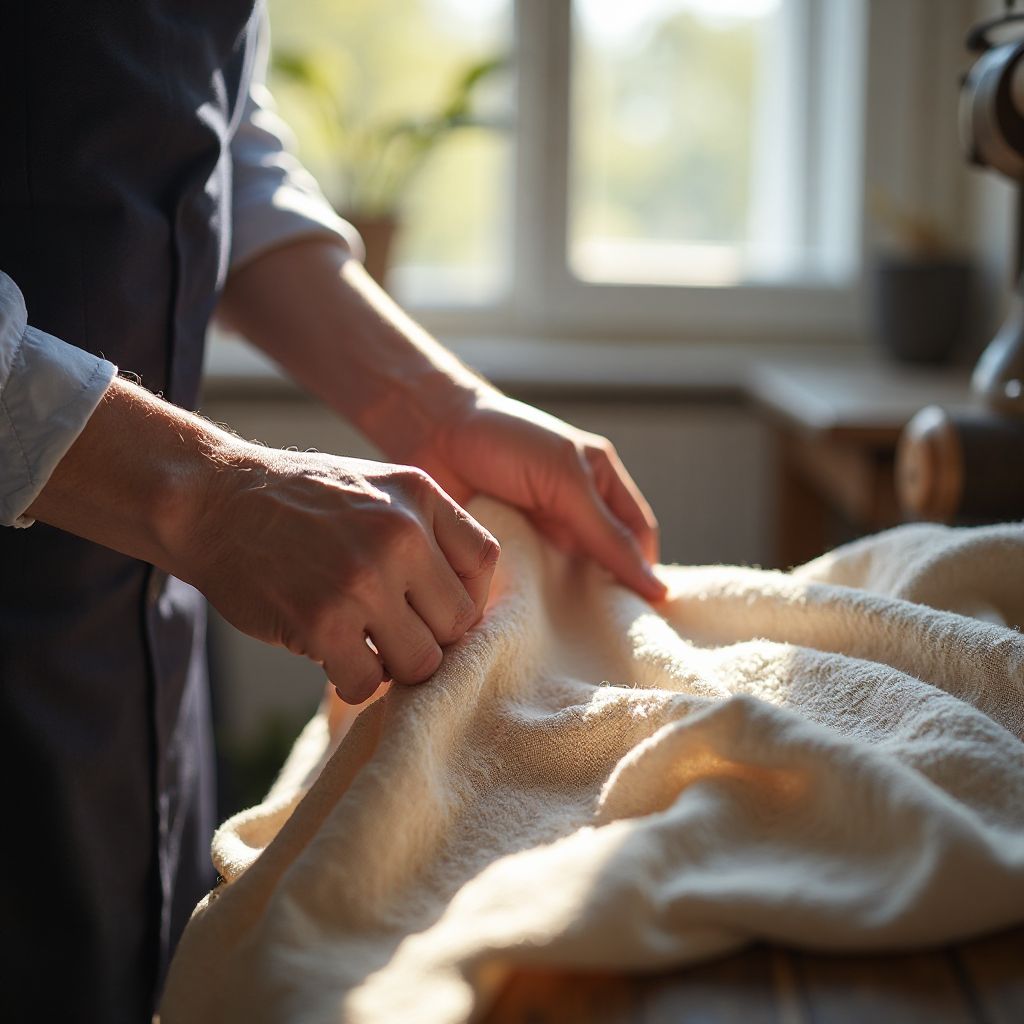
Feel for Substance: A quality fabric should feel substantial, not flimsy or overly thin. It should have a satisfying weight that suggests durability. Gently scrunch a section in your hand – does it feel dense, or does it feel like it could easily tear?
-
Smoothness & Softness: High-quality natural fibers like silk, cashmere, fine cotton, and merino wool will feel exceptionally smooth, soft, and luxurious against the skin. Even quality synthetics like Tencel or Modal can feel wonderfully soft. Avoid anything that feels rough, scratchy, or overly stiff unless it’s an intentional design choice for structure.
-
Drape: Hold a corner of the fabric up and let it fall. Does it drape beautifully, flowing and conforming, or does it hang stiffly and awkwardly? A good drape indicates a well-constructed fabric that will move gracefully with your body.
The Visual Inspection: What Your Eyes Can Tell You
-
Examine the Weave/Knit: Hold the fabric up to the light. Look for a tight, even, and consistent weave or knit. There should be no visible gaps, loose threads, snags, or irregularities. If you can easily see through it (unless it’s sheer by design), it might be too thin and prone to damage.
-
Check for Pilling: Look closely at areas prone to friction, like under the arms or inner thighs (if it’s a pant). If the fabric already shows signs of pilling (small fuzzy balls), it’s a strong indicator of low-quality fibers that will pill quickly and extensively with wear.
-
Color Consistency: Check for any uneven dyeing, fading, or color bleeding, especially at seams or folds. The color should be uniform and rich throughout the garment.
-
Sheen: Natural fibers like silk and high-quality cotton often have a subtle, elegant luster. Beware of an overly shiny, plasticky sheen, which is often a hallmark of cheap synthetic materials like low-grade polyester.
The Stretch & Recovery Test
-
Gently stretch a small section of the fabric, especially if it’s a knit or has elastane content. Does it snap back to its original shape quickly and completely, or does it remain stretched out and saggy? Good recovery is crucial for garments to maintain their shape and prevent bagging.
The Wrinkle Test
-
Crush a small, inconspicuous section of the fabric in your hand for about 10-15 seconds. Release it. While some natural fibers like linen and cotton are known to wrinkle, quality versions will either smooth out somewhat or exhibit soft, natural creases rather than sharp, permanent wrinkles. Cheap synthetics often wrinkle severely and retain those harsh lines.
Read the Label: The Inside Story
-
Fiber Content: Always check the composition tag. 100% natural fibers (cotton, wool, silk, linen, cashmere) are often a good indicator of quality, though excellent blends exist (e.g., wool-cashmere for softness, cotton-spandex for comfort and recovery). Be wary of high percentages of acrylic or cheap polyester, which can look and feel less luxurious and may pill easily. Performance fabrics from brands like Nike, however, are an exception; their synthetic blends are engineered for specific functions like moisture-wicking and durability.
-
Care Instructions: While not directly about quality, understanding care instructions helps you gauge the fabric’s durability and your commitment to its upkeep. Delicate fabrics might require special care but offer superior feel and drape.
Expert Tips: Insider Secrets You Won’t Find Everywhere
-
Listen to the Sound: Believe it or not, some quality fabrics have a subtle sound. A crisp, high-thread-count cotton might have a gentle rustle, and pure silk can have a soft whisper as it moves. Cheap, stiff synthetics often feel silent and lifeless.
-
The “Hand” of the Fabric: This is a professional term referring to the overall tactile sensation and drape of a fabric. It’s an intuitive understanding that develops with practice. The better the “hand,” the more luxurious and comfortable the fabric. It encompasses softness, crispness, coolness, warmth, and resilience.
-
Examine the Seams: While not strictly fabric, well-finished seams (like French seams or neatly serged edges) often indicate a garment made with care from quality materials. If the construction is sloppy, chances are the fabric choice wasn’t a priority either.
-
Consider the “Bounce-Back”: For knits, particularly sweaters, gently pull a section and watch how quickly and fully it returns to its original form. High-quality wools and cashmeres have excellent elasticity and memory, meaning they’ll resist stretching out and bagging.
Mistakes to Avoid
-
Assuming Price Always Equals Quality: While premium brands like Hermès or Louis Vuitton are renowned for their material quality, even high-end labels can occasionally use less-than-stellar fabrics for certain items. Conversely, you can find excellent quality at more accessible price points if you know what to look for, especially during sales.
-
Ignoring Care Labels: Even the most exquisite silk from Gucci will be ruined if you throw it in a hot wash. Proper care is paramount to maintaining fabric integrity.
-
Falling for “Fuzzy Logic”: Just because something feels soft doesn’t automatically mean it’s high quality. Some cheap acrylics can feel soft initially but will pill aggressively and lose their softness quickly.
-
Not Considering the Garment’s Purpose: A crisp, structured cotton is perfect for a tailored shirt, but would feel wrong for a flowing evening gown. Always evaluate the fabric in context of the garment’s intended use and design.
Mastering the art of identifying quality fabric is a game-changer. It transforms you from a passive consumer into an informed curator of your own style. You’ll buy less, choose better, and create a wardrobe that not only looks fantastic but feels incredible and stands the test of time. So, the next time you’re shopping, whether it’s for a trend-driven piece at Zara or an investment item, take a moment. Touch, feel, inspect, and let your newfound fabric knowledge guide your choices. Your wardrobe (and the planet) will thank you for it!

